
Transparent LED display
Category
Transparent glass window LED screen
Screen
Transparent LED Display
Location
Milan
Project Introduction
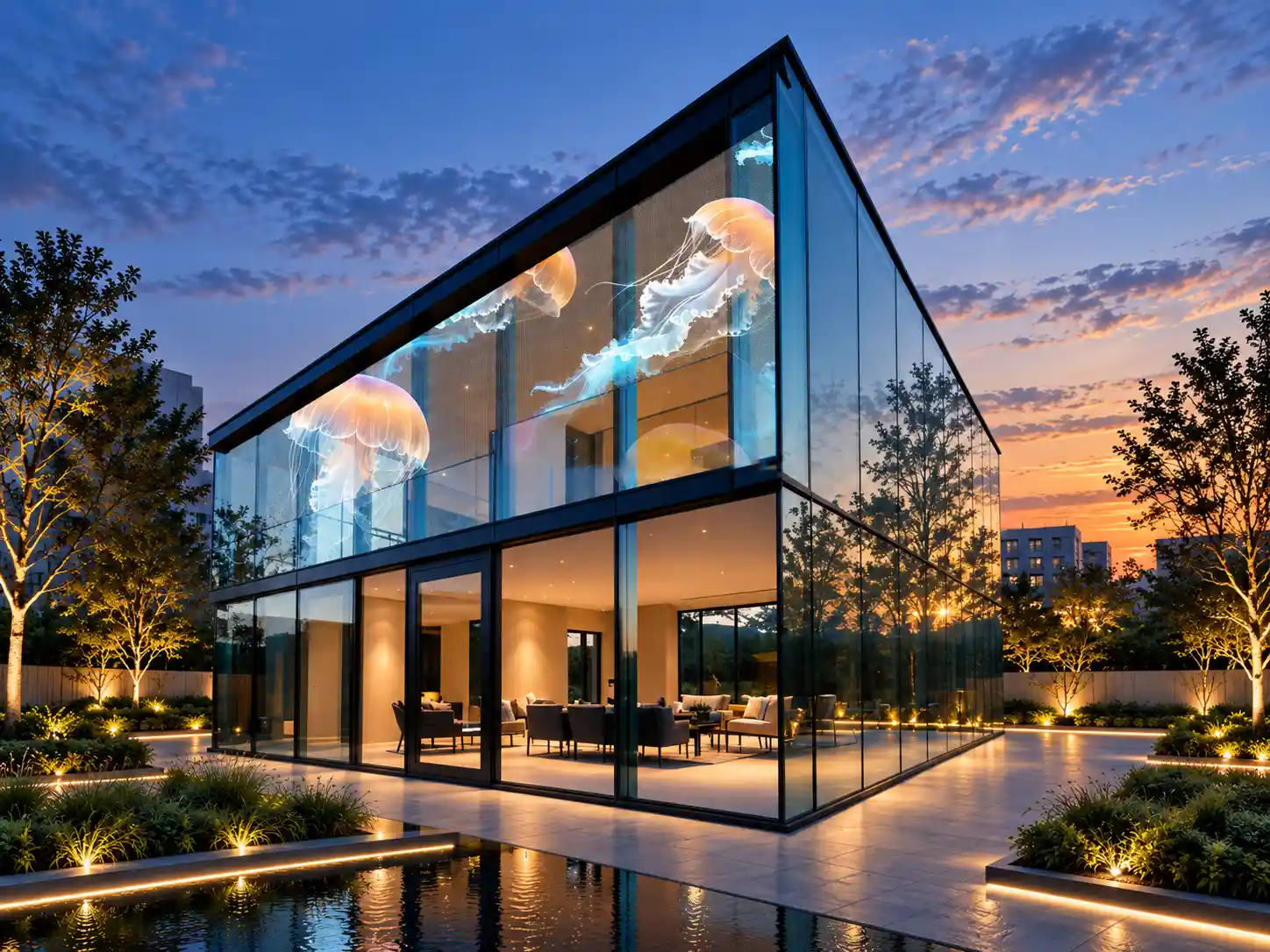
We customized a transparent flexible LED display solution for the upper-floor glass façade of an interior designer’s home in Milan, Italy. The client regularly welcomes customers into his home for meetings and design discussions, and wanted a distinctive visual feature that would complement the architecture. Measuring 23.04 metres wide by 6 metres high, the installation provides a total display area of 138.24 m², turning the glazing into a large digital canvas while preserving the open character of the space.
When switched off, the display maintains a largely transparent appearance, allowing views through the glass and blending with the building’s design. When operating, vivid imagery brings the façade to life. Floating subjects and flowing animations create a striking visual effect, giving visiting clients a memorable introduction to a home where interior design and digital creativity come together.
We selected 1,000 × 1,920 mm modules to reduce the number of panel joints across the large display area. Although the intended viewing distance was well beyond six metres, the customer chose a P6 pixel pitch to achieve finer image detail than a coarser-pitch alternative. This configuration reflects the client’s emphasis on presentation quality, with the screen layout tailored to the proportions of the glazing.
For a glass installation of this scale, accurate measurement and panel alignment are essential. The module layout needs to account for window frames, glass joints, and installation clearances so that the display fits neatly into the existing façade. The mounting method must also suit both the selected product and the glass surface. Where adhesive attachment is used, surface compatibility, thorough cleaning, and dry installation conditions are important for a consistent finish. Aligning adjacent modules carefully helps minimize visible discontinuities in the displayed content.
Cable routing and equipment access are equally important in a residential setting. Power and signal cables should follow the existing window frames wherever practical to keep the installation visually discreet. Power supplies and control equipment need accessible locations with suitable ventilation, while temperatures near sun-exposed glazing should remain within the product’s operating limits. These details help balance a clean architectural appearance with practical servicing needs.
Brightness and content should be adapted to the way the home is used. Suitable daytime and evening settings help maintain visibility without making the display unnecessarily bright after dark. Content mapped to the screen’s actual pixel dimensions helps preserve proportions, while dark backgrounds and clearly defined subjects emphasize the transparent, floating-image effect. By combining a customized layout with carefully selected display technology, this project demonstrates how residential glazing can become a creative platform for digital art and client presentations.